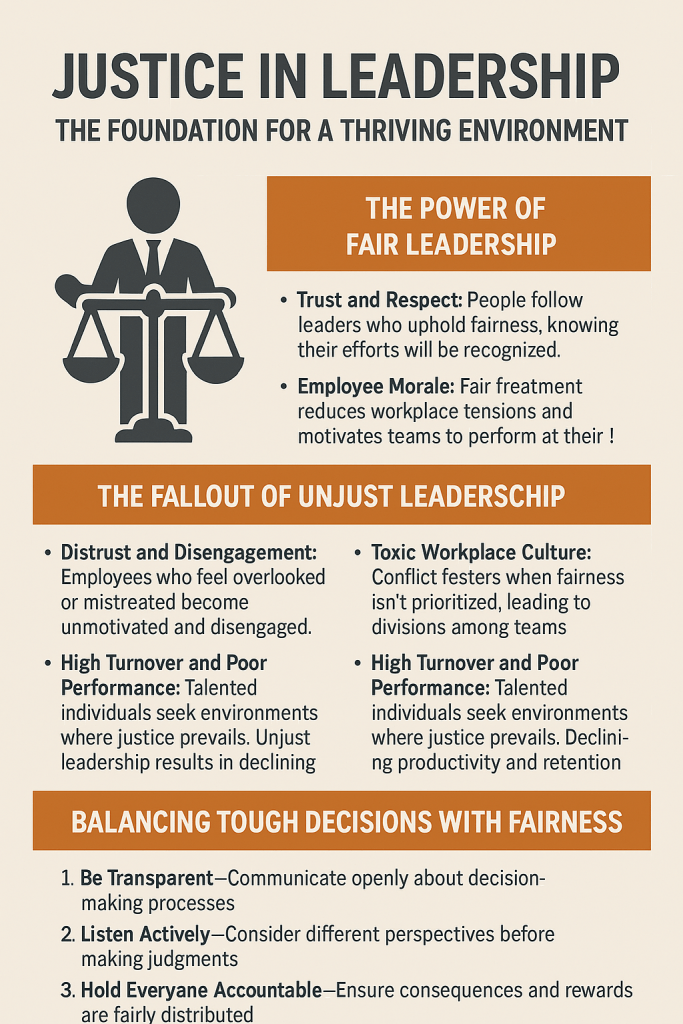
Justice isn’t just a moral ideal it’s the bedrock of effective leadership. Leaders who prioritize fairness foster trust, loyalty, and collaboration, while those who act unjustly create resentment and chaos. In this blog, we’ll explore why fairness matters in leadership, how it shapes a positive work culture, and what happens when justice is absent.
The Power of Fair Leadership
A just leader ensures that decisions are made transparently, rewards are given equitably, and discipline is enforced consistently. This fosters:
- Trust and Respect: People follow leaders who uphold fairness, knowing their efforts will be recognized.
- Employee Morale: Fair treatment reduces workplace tensions and motivates teams to perform at their best.
- Collaboration and Innovation: When employees feel valued and heard, they’re more likely to contribute ideas and work together seamlessly.
The Fallout of Unjust Leadership
On the flip side, unfair leadership erodes confidence and drives talented individuals away. An environment tainted by favoritism, inconsistent decision-making, or unchecked biases leads to:
- Distrust and Disengagement: Employees who feel overlooked or mistreated become unmotivated and disengaged.
- Toxic Workplace Culture: Conflict festers when fairness isn’t prioritized, leading to divisions among teams.
- High Turnover and Poor Performance: Talented individuals seek environments where justice prevails. Unjust leadership results in declining productivity and retention.
Balancing Tough Decisions with Fairness
Fair leaders must make difficult choices, but justice ensures that even tough decisions are respected. Leaders should:
- Be Transparent—Communicate openly about decision-making processes.
- Listen Actively—Consider different perspectives before making judgments.
- Hold Everyone Accountable—Ensure consequences and rewards are fairly distributed.
Final Thoughts
Justice isn’t just about doing what’s right it’s about creating a foundation for success. Whether leading a company, a team, or an entire organization, fairness can be the difference between a thriving environment and a failing one. Great leaders recognize that integrity isn’t optional it’s essential.
 Lead.Manage.Succeed
Leave a comment