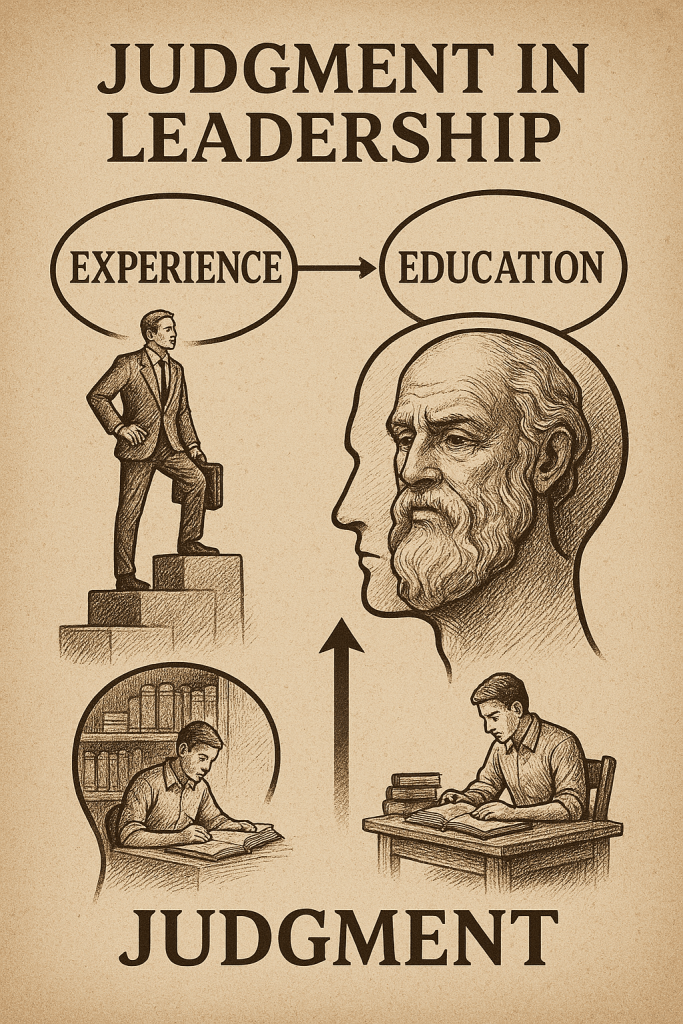
Judgment in Leadership: The Wisdom of Experience and Education
Leadership is not just about making decisions it’s about making the right decisions. At the heart of every great leader is a keen sense of judgment, the ability to analyze situations, weigh options, and navigate challenges with clarity. But judgment isn’t something people are born with it’s built through experience and education, refined over time, and expanded through learning from others.
Experience: The Crucible of Judgment
Those who dedicate themselves to developing their judgment ultimately stand above the noise, leading with clarity, confidence, and wisdom.
There’s a reason the best leaders often have years of experience under their belts. They’ve seen patterns, recognized pitfalls, and developed instincts that textbooks can’t fully teach. Mistakes, setbacks, victories, and unexpected twists each moment contributes to sharper judgment. When leaders go through real-world situations, they learn how to anticipate consequences, understand human behavior, and refine their problem-solving abilities.
Consider a CEO navigating a sudden market downturn. A first-time executive might panic, reacting emotionally or making impulsive decisions. But a leader with years of experience likely sees beyond the immediate crisis, assessing long-term outcomes, relying on past lessons, and making measured, strategic choices.
Education: Expanding the Mind’s Horizon
While experience is invaluable, relying on only personal experience is limiting. A leader may have seen a hundred situations but what if the next challenge is something completely new? This is where education steps in, acting as a force multiplier for judgment.
Books, microlearning, mentorships, case studies, and structured learning expose leaders to thousands of years of wisdom. The world has already seen financial crashes, wars, industrial revolutions, technological disruptions, ethical dilemmas, and visionary breakthroughs. By studying history, leadership theory, psychology, and the experiences of others, leaders can build a “3,000-year-old mind” an intellect that doesn’t just rely on one lifetime of lessons but on the accumulated wisdom of humanity.
From biographies of great leaders to short-form learning (microlearning) that distills key insights, education expands judgment beyond personal experience. It teaches leaders to analyze data, think critically, recognize patterns across time, and gain insights from diverse industries and cultures.
Learning from Others: The Shortcut to Wisdom
If experience shapes instincts and education sharpens perspective, learning from others accelerates both. Leaders who actively seek mentorship, engage in discussions, and analyze case studies tap into collective intelligence.
Imagine a young entrepreneur seeking guidance from seasoned business minds. Instead of waiting decades to make certain mistakes, they can preemptively learn from those who’ve already faced those challenges. Seeking counsel, watching interviews, and reading leadership reflections allow individuals to borrow wisdom, skipping unnecessary failures and refining judgment faster.
Conclusion
Great leadership is not just about making decisions it’s about making the best possible decisions. Judgment is a lifelong journey, built through the fires of experience and polished through education. By constantly learning, absorbing historical wisdom, and seeking insights from others, leaders cultivate deep, insightful judgment the kind that can see beyond the immediate, anticipate change, and shape the future.
 Lead.Manage.Succeed
Leave a comment