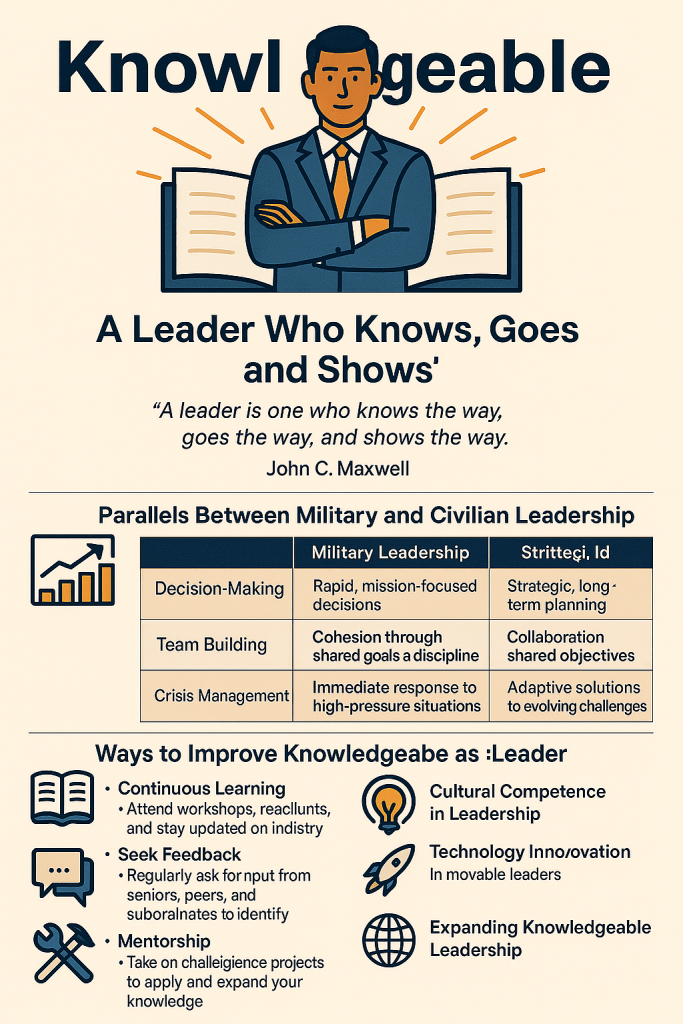
Knowledgeable: A Leader Who Knows, Goes, and Shows
In the pursuit of leadership, knowledge isn’t just power, it’s responsibility. Being knowledgeable means more than retaining facts or mastering systems. It means embodying what you understand, making decisions informed by both insight and experience, and guiding others with clarity and conviction.
John C. Maxwell summed it up best: “A leader is one who knows the way, goes the way, and shows the way.”1 This quote captures the essence of knowledgeable leadership, they know what needs to happen they walk the path all the while illuminating it for others.
Parallels Between Military and Civilian Leadership
📊 Military leadership emphasizes structure, discipline, and chain of command, while civilian leadership often focuses on adaptability, collaboration, and innovation. Despite these differences, both share the need for knowledgeable leaders who can inspire and guide their teams effectively.
Examples of Knowledgeable Leadership
| Aspect | Military Leadership | Civilian Leadership |
| Decision-Making | Rapid, mission-focused decisions | Strategic, long-term planning |
| Team Building | Cohesion through shared goals and discipline | Collaboration through shared objectives |
| Crisis Management | Immediate response to high-pressure situations | Adaptive solutions to evolving challenges |
Ways to Improve Knowledge as a Leader
📚 – Continuous Learning: Attend workshops, read books, and stay updated on industry trends.
💬 – Seek Feedback: Regularly ask for input from seniors, peers, and subordinates to identify areas for growth.
🤝 – Mentorship: Learn from experienced leaders and share your knowledge with others.
🛠️ – Practical Experience: Take on challenging projects to apply and expand your knowledge.
🌐 – Networking: Build relationships with professionals in your field to exchange insights and ideas.
Expanding Knowledgeable Leadership
The Role of Emotional Intelligence
💡 Knowledgeable leaders understand that emotional intelligence is key to effective leadership. By recognizing and managing their own emotions, as well as empathizing with others, leaders can build stronger relationships and foster a positive team environment. I was once told that people with high EQ (emotional intelligence) often make the best leaders. I believe that to be so because all the leaders that I have known, and over 28 years of serving with the best leaders in the world in the best leadership organization, I would have to agree. An authentic leader who can pick up on the tone of the room can identity what needs to be done to sway room and will build confidence in the future. This is someone that people will follow to the ends of the earth and beyond.
Cultural Competence in Leadership
🌍 In an increasingly globalized world, cultural competence is essential for knowledgeable leaders. Understanding and respecting diverse perspectives allows leaders to navigate complex social dynamics and avoid making cultural blunders at the expense of reputation. Know cultural norms, mores, and values this builds trust and shows you’re authentic and interested.
Technology and Innovation
🚀 Staying ahead in the digital age requires leaders to embrace technology and innovation. Knowledgeable leaders leverage tools and platforms to streamline processes, enhance communication, and drive progress. If it can be automated, then automate to free up human capital to do the higher level thinking that we are all capable of and unlock peoples innovation and creativity.
The 3000-Year-Old Mind
📜 Knowledgeable leaders understand the value of learning from history. By studying the works and experiences of those who came before us, we can cultivate the 3000-year-old mind. This approach allows leaders to avoid the pitfalls of others on the road to greatness and build on the wisdom of the past. Knowledge is power not just the power of rank or title, but the power to inspire and lead others through understanding and insight. The Marine Corps has really ingrained the 3000-year-old mind idea into their organizational leaders at all levels through reading lists, professional military education, tactical decision games, and online learning venues just to name a few tools they use.
Real-Life Examples of Knowledgeable Leadership
- Military Example: General Dwight D. Eisenhower’s strategic planning during World War II showcased his deep understanding of logistics and coalition-building.2
- Civilian Example: Steve Jobs’ leadership at Apple exemplified visionary thinking and innovation, transforming the company into a global leader in technology and design.
Actionable Tips for Aspiring Leaders
🎯 – Develop a Learning Plan: Set specific goals for acquiring new skills and knowledge.
🔍 – Engage in Cross-Disciplinary Learning: Explore topics outside your immediate field to gain broader insights.
🗣️ – Participate in Leadership Forums: Join discussions and workshops to exchange ideas with other leaders.
🔄 – Reflect and Adapt: Regularly assess your leadership style and make adjustments based on feedback and outcomes.
Final Formation
📖 Knowledgeable leadership is not a destination but a journey. It requires continuous learning, adaptability, and a commitment to growth. The best leaders are lifelong learners. By embracing the principles outlined in this blog, leaders can inspire their teams, navigate challenges, and leave a lasting impact. .
Let’s lead with knowledge, empathy, and innovation—because the world needs leaders who know, go, and show.
1: John C. Maxwell, “The 21 Irrefutable Laws of Leadership.”
2: Eisenhower, Dwight D., “Crusade in Europe.”
 Lead.Manage.Succeed
Leave a comment