Justice isn’t just a moral ideal it’s the bedrock of effective leadership. Leaders who prioritize fairness foster trust, loyalty, and collaboration, while those who act unjustly create resentment and chaos. In this blog, we’ll explore why fairness matters in leadership, how it shapes a positive work culture, and what happens when justice is absent.
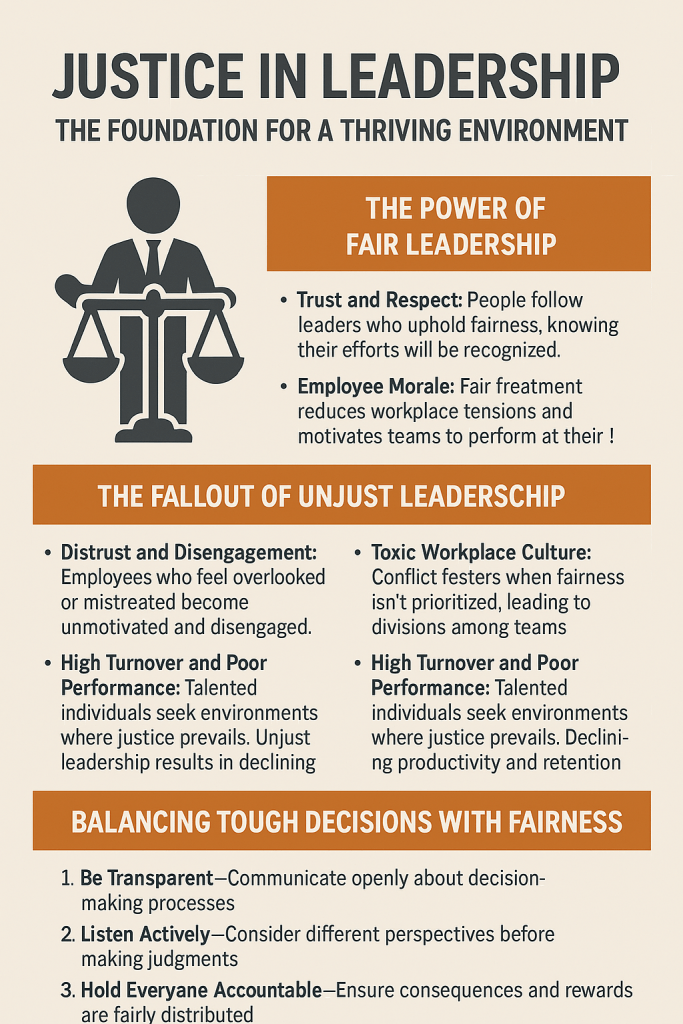
The Power of Fair Leadership
A just leader ensures that decisions are made transparently, rewards are given equitably, and discipline is enforced consistently. This fosters:
Trust and Respect: People follow leaders who uphold fairness, knowing their efforts will be recognized.
Employee Morale: Fair treatment reduces workplace tensions and motivates teams to perform at their best.
Collaboration and Innovation: When employees feel valued and heard, they’re more likely to contribute ideas and work together seamlessly.
The Fallout of Unjust Leadership
On the flip side, unfair leadership erodes confidence and drives talented individuals away. An environment tainted by favoritism, inconsistent decision-making, or unchecked biases leads to:
Distrust and Disengagement: Employees who feel overlooked or mistreated become unmotivated and disengaged.
Toxic Workplace Culture: Conflict festers when fairness isn’t prioritized, leading to divisions among teams.
High Turnover and Poor Performance: Talented individuals seek environments where justice prevails. Unjust leadership results in declining productivity and retention.
Balancing Tough Decisions with Fairness
Fair leaders must make difficult choices, but justice ensures that even tough decisions are respected. Leaders should:
Be Transparent—Communicate openly about decision-making processes.
Listen Actively—Consider different perspectives before making judgments.
Hold Everyone Accountable—Ensure consequences and rewards are fairly distributed.
Final Thoughts
Justice isn’t just about doing what’s right it’s about creating a foundation for success. Whether leading a company, a team, or an entire organization, fairness can be the difference between a thriving environment and a failing one. Great leaders recognize that integrity isn’t optional it’s essential.
Leadership Lessons from the Marine Corps: A Foundation for Success
Leadership isn’t about holding a title, it’s about how you influence, guide, and support those around you. Some of the most valuable leadership lessons I’ve learned came from my time in the United States Marine Corps, starting with Recruit Training, where leadership was ingrained in every aspect of our experience from day one.
If you’ve never been through Marine Corps boot camp, imagine an environment designed to challenge you physically, mentally, and emotionally all while instilling essential leadership qualities. It’s a place where teamwork is non-negotiable, accountability is expected, and core leadership principles become second nature.
For me, stepping onto the yellow footprints at Marine Corps Recruit Depot Parris Island was my first real introduction to formal leadership training. My drill instructors Staff Sergeant Roberts, Sergeant Falls, and Sergeant Stewart were relentless in pushing us to understand, apply, and live by the principles of leadership. These weren’t just words in a handbook; they were woven into every training exercise, every lesson, and every challenge we faced.
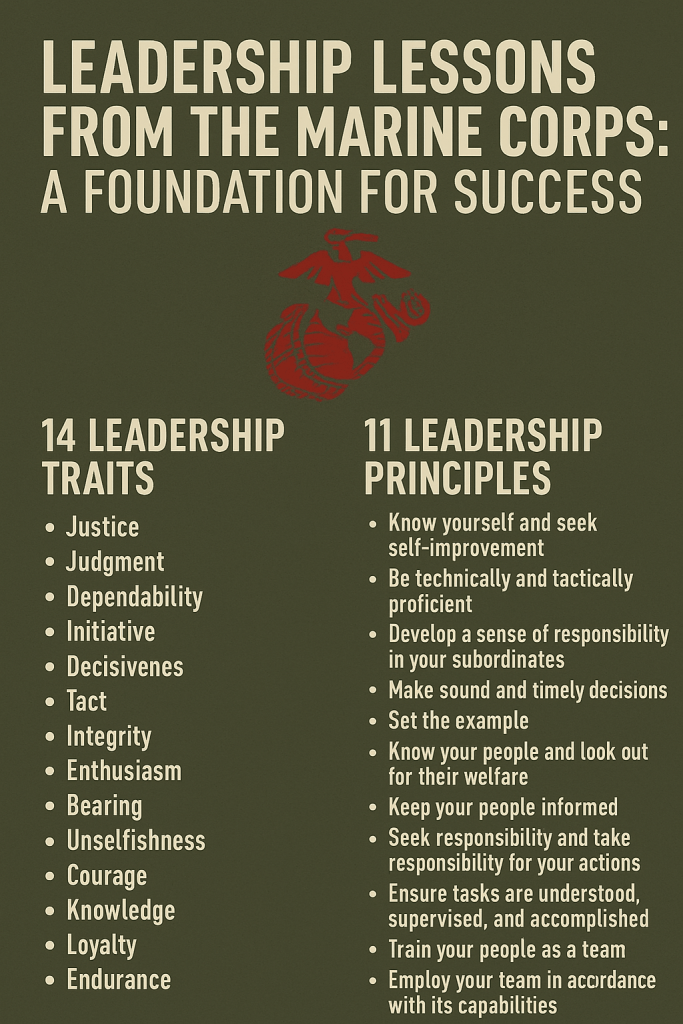
One of the first things drilled into us was the 14 Leadership Traits and 11 Leadership Principles not as textbook definitions but as lessons we lived through daily. These concepts shaped the way Marines lead, and over the course of my 28-plus-year career, I’ve relied on them as a guide for leadership in any situation, whether in the military or beyond.
The 14 Leadership Traits: JJDIDTIEBUCKLE
Marines remember the 14 Leadership Traits using the acronym JJDIDTIEBUCKLE, each letter representing a critical trait that defines strong leadership:
Justice – Being fair and consistent in decisions.
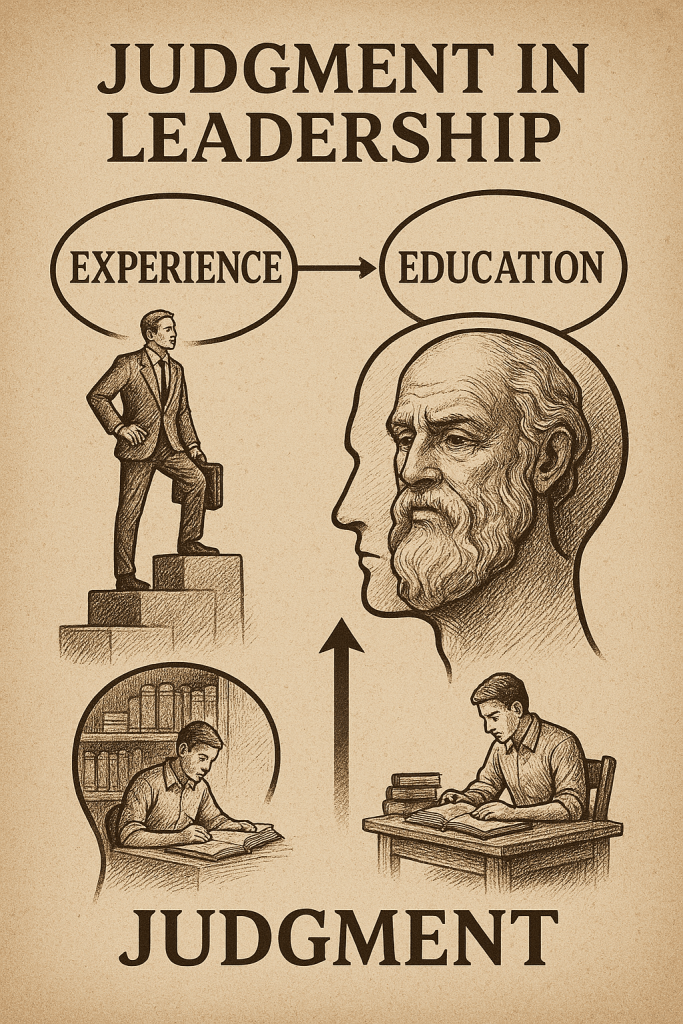
Judgment – Making sound and logical choices.
Dependability – Being reliable and trustworthy.
Initiative – Acting without being told.
Decisiveness – Making firm, timely decisions.
Tact – Handling situations with diplomacy.
Integrity – Always being honest and ethical.
Enthusiasm – Bringing energy and passion to leadership.
Bearing – Presenting a professional and confident demeanor
Unselfishness – Putting the needs of others before your own.
Courage – Facing challenges with strength and resolve.
Knowledge – Continually learning and improving.
Loyalty – Staying committed to your team and mission.
Endurance – Pushing through hardships with resilience.
These traits became second nature, not just during my time in the Marine Corps but throughout my career and life. And when leadership starts to feel overwhelming or challenges pile up, I always come back to these basics because they provide clarity when things get complicated.
The 11 Leadership Principles
While the leadership traits define who a leader should be, the 11 Leadership Principles focus on what a leader should do. These principles serve as a practical guide for leading effectively, ensuring that leaders not only possess strong character but also apply it in their actions:
Know yourself and seek self-improvement – Leadership begins with self-awareness and continuous growth.
Be technically and tactically proficient – Leaders must understand their role and the skills required to execute it successfully.
Develop a sense of responsibility in your subordinates – Empowering others to take ownership fosters stronger teams.
Make sound and timely decisions – Leadership requires decisiveness, especially in challenging situations.
Set the example – Actions speak louder than words. Leaders must embody the values they expect from others.
Know your people and look out for their welfare – True leadership involves caring for those you lead, both professionally and personally.
Keep your people informed – Transparency and clear communication build trust and unity within a team.
Seek responsibility and take responsibility for your actions – Leaders don’t shy away from challenges or accountability.
Ensure tasks are understood, supervised, and accomplished – A great plan means nothing without execution.
Train your people as a team – Cohesion and teamwork are the backbone of success in any organization.
Employ your team in accordance with its capabilities – Effective leadership means understanding strengths and assigning tasks accordingly.
These principles provide a framework for leadership in any environment, reinforcing accountability, trust, and execution.
Why These Lessons Matter Beyond the Marines
You don’t need to be in the military to benefit from these leadership principles. Whether you’re leading a business, a team, or even your own personal growth, these traits and principles create a solid foundation for effective leadership. They remind us that leadership isn’t about power, it’s about service, accountability, and making the right choices even when they’re difficult.
This post is just the starting point. In future articles, I’ll dive deeper into each of these principles, sharing real-world applications and how they remain just as valuable today as they were when I first learned them. Strong leadership starts with a solid foundation so let’s build it together.
Leadership and management may often be lumped together, but they’re not quite the same thing. Understanding the difference is really important if you want your organization to thrive in the long run. When the lines between the two blur, it can lead to all kinds of issues and confusion in decision-making, team dysfunction, and a lack of clear strategy. Simply put, leadership is about having a vision and inspiring people to rally around it, while management is about ensuring that vision is put into action through well-organized processes. Without both, things can go sideways fast, either you’re adrift with no direction or drowning in chaos because no one’s steering the ship.
That’s why a blog about leadership and management has to begin here. Before we jump into deep-dive strategies, industry trends, or personal growth tips, it’s vital to lay down some basics. Yes, leaders and managers sometimes share tasks, but knowing how they differ, and how they work together is the secret to building strong teams, creating lasting change, and setting up organizations for success.
Leadership is all about inspiration. It’s about guiding people, shaping a vision, and motivating teams to come together to achieve big goals. Great leaders set direction, influence the culture, and foster growth, both in individuals and the organization as a whole.
Management, on the other hand, is more about making sure everything runs like clockwork. It’s about organizing projects, improving processes, and keeping operations efficient. Managers deal with the nitty-gritty of logistics, resource coordination, and sticking to plans to meet specific goals.
Now, here’s where things get interesting: Strategic leadership and management take these roles to another level. Strategic leaders look at the big picture, they think long-term, make bold decisions, and position their organizations to stay ahead of the game. They anticipate changes, adapt proactively, and align people toward future success.
Strategic management steps in to make sure all those big ideas and plans actually happen. It’s about creating systems, allocating resources, and keeping track of progress to turn leadership’s vision into measurable results.
In a nutshell, leadership is about lighting the fire, and management keeps it burning. Strategic leadership plots the course for the future, while strategic management ensures the ship arrives safely at its destination.
Daniel Presley is a dedicated professional passionate about leadership and management. With years of experience guiding teams and refining organizational strategies, Daniel understands the challenges leaders face and offers practical insights to help others grow. Through Leader-Manager.com, Daniel shares valuable knowledge on effective leadership, decision-making, and workplace success, empowering individuals to lead with confidence and clarity.
Whether discussing leadership principles, management techniques, or personal development strategies, Presley’s goal is to inspire and equip readers with the tools they need to thrive in their careers and beyond.