Tag: #Business #GovCon #Leadership #TalentAcquistion #TechCareerDevelopment #TechLeadership

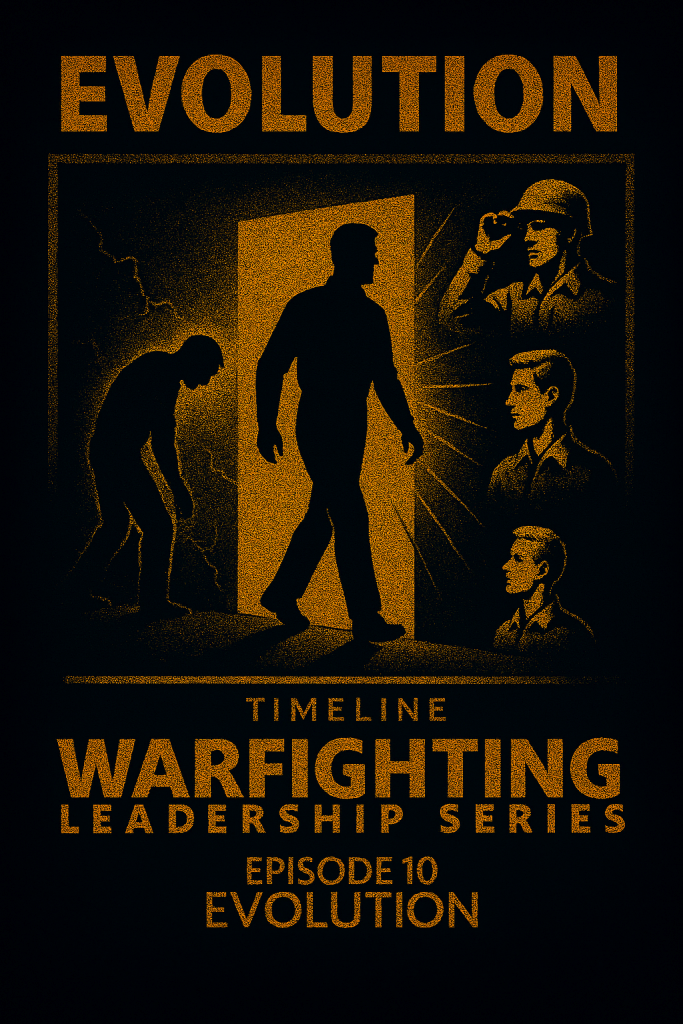
  • 🌱 Episode 10: Evolution, What Changes and What Endures

    🌱 Episode 10: Evolution, What Changes and What Endures

    INTRODUCTION 🔍

    Leadership changes you. Sometimes slowly, like water wearing down stone. Sometimes all at once, like a blast wave that rearranges the room and leaves you blinking in the dust. This episode is about that change. What bends. What breaks. What refuses to move no matter how much pressure you put on it. And what you carry forward whether you want to or not.

    We are talking about evolution, not as a slogan, but as the quiet, uncomfortable truth of leadership.


    CORE CONCEPTS 💡

    🌪️ 1. Environments Change Faster Than Leaders Expect

    You think you have a handle on things. Then the ground shifts. A new threat. A new constraint. A new personality in the room who changes the entire emotional temperature. Leaders who cling to the old pattern get left behind. The environment does not wait for you to catch up.

    🔥 2. Pressure Burns Away Illusions

    There is a moment in every leader’s life when the story they tell themselves stops working. Maybe it happens in a meeting where you realize you are out of your depth. Maybe it happens in a crisis when you freeze for half a second longer than you should. Pressure strips away the parts of you that were never real. What remains is the beginning of evolution.

    🧭 3. Adaptation Is Not Reinvention

    People love to talk about reinvention. It sounds dramatic. Clean. But real adaptation is messy. You keep some things. You discard others. You learn to move differently. You stop pretending you can be everything to everyone. You evolve by subtraction as much as addition.

    🪨 4. Some Things Should Not Change

    This is the part people forget. Not everything evolves. Some things must stay exactly where they are. Integrity. Judgment. The ability to tell the truth even when it costs you. These are the anchor points. If you let them drift, everything else drifts with them.

    🌱 5. Evolution Is a Series of Small, Uncomfortable Choices

    It is not a single moment. It is a hundred small ones. The conversation you avoid. The decision you delay. The apology you owe. The standard you enforce even when you are tired. Evolution is not glamorous. It is the slow, steady work of becoming someone worth following.

    Sage Advice:
    If you want to evolve, stop trying to look evolved. Do the work instead.


    CORE INSIGHT 🎯

    Leaders do not transform in a single moment. They evolve through pressure, honesty, and the choices they make when no one is watching.


    MILITARY TO CIVILIAN TRANSLATION TABLE 📘

    Military ConceptLeadership TranslationBusiness or IT Example
    Changing battlefieldShifting market or org landscapeNew competitors, new tech, new constraints
    FrictionOrganizational resistanceLegacy systems, culture drag
    AdaptationLeadership growthChanging management style or priorities
    Anchoring principlesCore valuesEthics, trust, long term vision
    Evolution under pressureGrowth through adversityCrisis leadership, restructuring

    LOGOS, ETHOS, PATHOS TRIAD 🎙️

    Logos (Logic)

    Change is not optional. Systems evolve. Teams evolve. Threats evolve. Leaders who refuse to evolve become the bottleneck. The logic is simple. Adaptation is the only way to stay relevant in a world that does not slow down for anyone.

    Ethos (Credibility)

    Credibility comes from the willingness to confront your own limitations. People trust leaders who admit what they do not know, who adjust their approach when the situation demands it, and who hold onto their principles even when everything else is shifting. Credibility is earned in the moments when you choose growth over ego.

    Pathos (Emotion)

    Evolution hurts. It asks you to let go of the version of yourself that once worked. It forces you to face the parts of your leadership that are outdated or fragile. But there is something powerful in that discomfort. People follow leaders who are willing to grow in public, who show that change is possible even when it is painful.


    DISCUSSION PROMPT 💬

    Think back to a moment when the environment changed faster than you did. What did it force you to confront about yourself?


    FINAL FORMATION 🪖

    We explored evolution as the final force in Series I. You saw how leaders change, what they must protect, and how pressure shapes growth. In the next series, we shift from internal development to thinking and acting to gain advantage in conflict and markets. Series II: Purpose Drives Action: War and Business Policy.


    Disclaimer: The views expressed in this post do not represent the views of any organization or institution.

    #Business #GovCon #Leadership #TalentAcquistion #TechCareerDevelopment #TechLeadership
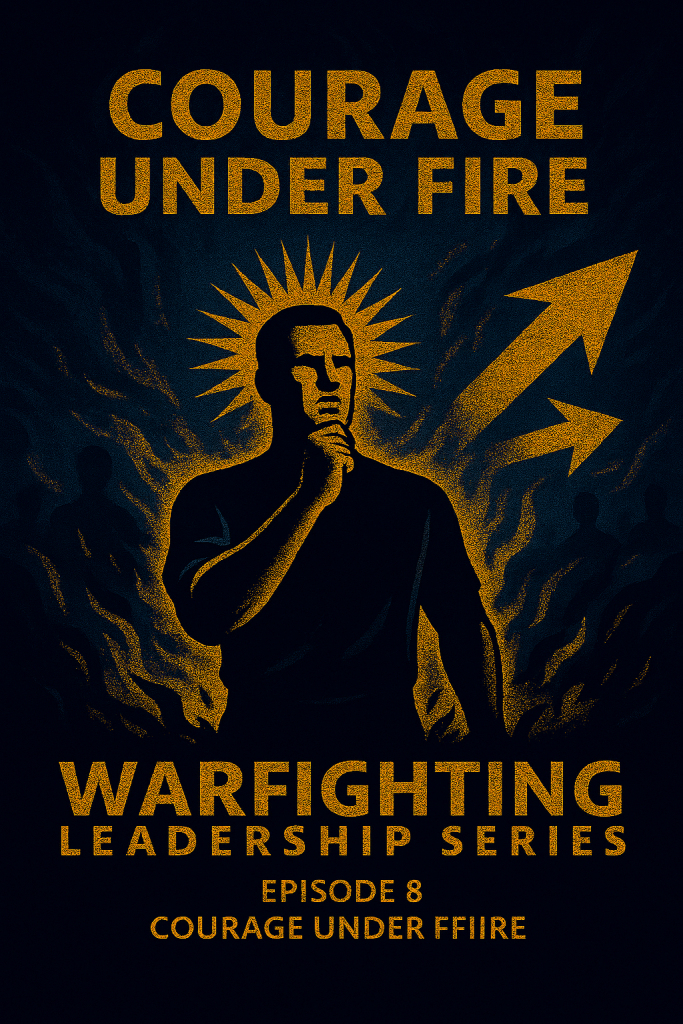
  • 🛡️Episode 8: Courage Under Fire, Moral Strength in Leadership

    🛡️ Episode 8: Courage Under Fire, Moral Strength in Leadership

    INTRODUCTION 🔍

    This episode explores courage as a moral force in leadership. In war and business, courage is not just physical bravery, it’s the ability to act rightly under pressure, to make hard decisions, and to lead when fear and doubt are strongest. Tell them what you’re going to tell them: courage is the moral engine of leadership.


    CORE CONCEPTS 💡

    Courage as the Oak Tree’s Roots

    Courage is the deep root system anchoring leadership’s moral strength, much like an oak tree standing firm through relentless storms. These roots represent unwavering ethical commitments that ground leaders when criticism, loss, or hardship threaten to shake their resolve. Just as the oak’s roots grow stronger beneath the surface, courage is a daily, conscious choice to align actions with core values, shining brightest when shadows fall.

    The Blacksmith’s Forge: Decision Pressure

    Under the intense heat of decision pressure, courage reveals its true form like steel forged in a blacksmith’s fiery furnace. Each hammer strike shapes the metal, just as each tough decision molds a leader’s character. Even when the path is unclear and sparks fly, leaders must act with clarity and integrity, emerging stronger and inspiring trust.

    Ripples on the Pond: The Ripple Effect of Courage

    Courage spreads like ripples across a still pond when a single stone is cast. One brave act ignites waves of boldness, encouraging others to stand firm and act with principle. This ripple effect weaves a fabric of trust and mutual support, strengthening the collective spirit. Leaders embodying courage, create environments where confidence grows and proactive action becomes the norm.

    The Musician’s Mastery: Courage as a Skill

    Courage is not an innate gift, but a skill honed like a musician mastering their instrument. Leaders develop it by embracing discomfort, learning from trials, and seeking guidance. Each challenge is a rehearsal for the next act of bravery, building the mental and emotional muscles needed for decisive leadership.

    The Sailor’s Weather Gauge: Fear as a Signal

    Fear, often mistaken as the enemy, is more like a seasoned sailor’s weather gauge, a natural signal warning of potential danger. The real foe is paralysis, the inability to act despite fear’s presence. Wise leaders read these signals and choose disciplined, purposeful action over avoidance or rashness.

    CORE INSIGHT 🎯

    Courage is the moral engine of leadership. It drives action when everything else breaks down.


    MILITARY TO CIVILIAN TRANSLATION TABLE 📘

    Military ConceptLeadership TranslationBusiness or IT Example
    Courage under fireMoral strength under pressureCEO defending ethics in a crisis
    Decision pressureHigh-stakes leadership momentsProduct recall or public failure
    Leading through fearEmotional steadinessManager calming layoffs or reorg
    Moral courageIntegrity in actionWhistleblower or ethical stand
    Courage as contagionInfluence through exampleTeam rallying after leader’s bold move

    LOGOS, ETHOS, PATHOS TRIAD 🎙️

    Logos (Logic)

    Courage enables action when logic alone fails. Leaders use logos to analyze risks, weigh consequences, and make reasoned decisions even in the face of uncertainty. Courage complements logos by pushing leaders to act decisively when data is incomplete or outcomes are unclear, turning thought into purposeful action.

    Ethos (Credibility)

    Credibility grows when leaders act with integrity under pressure. Ethos is built through consistent moral behavior, transparency, and accountability. When leaders demonstrate moral courage, they reinforce trustworthiness and inspire confidence, showing that their character aligns with their words and actions even in difficult circumstances.

    Pathos (Emotion)

    Courage resonates emotionally. It inspires, uplifts, and unites. Pathos connects leaders to their teams by evoking shared values and emotional commitment. Acts of courage stir passion and loyalty, motivating others to overcome fear and uncertainty. Through pathos, moral courage becomes a powerful force that binds groups together and drives collective resilience.


    DISCUSSION PROMPT 💬

    Think of a time when you witnessed moral courage. What impact did it have on the team or organization?


    FINAL FORMATION 🪖

    This episode explored courage as a moral force in leadership. You learned how courage drives action, builds trust, and reveals character under pressure. In the next episode, we explore the balance of physical, moral, and mental forces with Episode 9: Balancing Forces, Physical, Moral, Mental Power.


    Disclaimer: The views expressed in this post do not represent the views of any organization or institution.

    #Business #GovCon #Leadership #TalentAcquistion #TechCareerDevelopment #TechLeadership
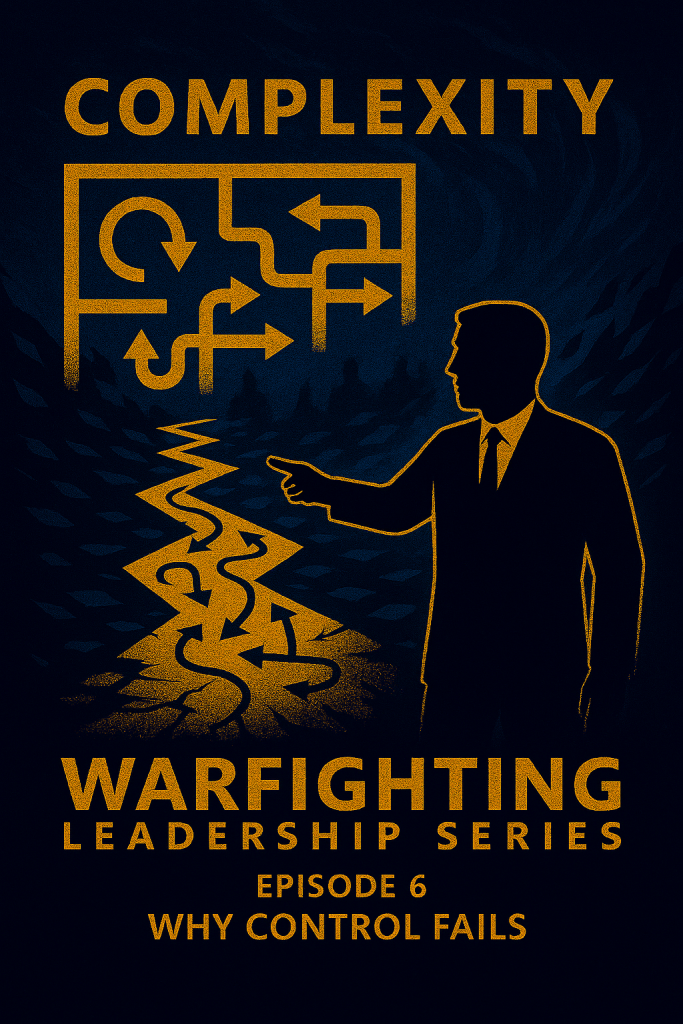
  • ⚙️ Episode 6: Complexity: Why Control Fails

    ⚙️ Episode 6: Complexity: Why Control Fails

    🔍 INTRODUCTION

    This episode explores the nature of complexity and why traditional control mechanisms break down in dynamic environments. You’ll learn how complexity differs from chaos, why centralized control becomes a liability, and how leaders must shift from command to influence. The goal is to understand complexity as a defining feature of modern leadership environments and to develop strategies for navigating it effectively.


    🧠 CORE CONCEPTS

    🕸️ Complexity Is Not Chaos

    Chaos is randomness. Complexity is interaction. Complex systems have patterns, but they are unpredictable and nonlinear. Trying to control them with rigid plans leads to failure. Complexity emerges from interdependent parts, feedback loops, and distributed decision-making. Leaders must recognize that complexity is not a flaw, it’s the environment.

    🔄 Control Fails Because Systems Interact

    In complex environments, every action affects multiple parts. Feedback loops, delays, and emergent behavior make prediction unreliable. Leaders who try to control everything slow the system and create bottlenecks. The more centralized the control, the more fragile the system becomes.

    🧭 Influence Beats Control

    Influence is faster than control. Leaders must shape intent, priorities, and culture, not micromanage execution. The goal is alignment, not obedience. Influence allows distributed actors to make decisions that support the mission without waiting for permission.

    🧩 Decentralization Is Not Disorder

    Decentralized execution works when intent is clear and trust is high. It allows teams to adapt faster than any central authority. Leaders must design systems that can operate without constant supervision. This requires clarity of purpose, shared understanding, and mutual trust.

    🧠 Complexity Demands Clarity

    The more complex the environment, the simpler the guidance must be. Leaders must distill intent into clear, teachable principles. Clarity is not about detail, it’s about direction. In complexity, clarity is the most powerful form of control.

    Sage Advice: In complexity, clarity moves faster than control, empowering teams by providing intent in complex systems exponentially amplifies the team’s ability to operate with purpose to achieve goals and win.


    🎯 CORE INSIGHT

    Control fails in complexity. In today’s fast pace, highly connected digital age Influence, clarity, and trust are the new tools of leadership.


    📘 MILITARY TO CIVILIAN TRANSLATION TABLE

    Military ConceptLeadership TranslationBusiness or IT Example
    Complex battlefieldInterdependent systemsDistributed teams and platforms
    Centralized commandBottlenecked decision-makingSlow executive approvals
    Decentralized executionEmpowered teamsAgile squads with clear mission intent
    Commander’s intentStrategic clarityProduct vision or campaign goal
    Feedback loopsEmergent behaviorCustomer response shaping product roadmap

    🎙️ LOGOS, ETHOS, PATHOS TRIAD

    Logos (Logic)

    Complex systems cannot be controlled through linear planning. Leaders must design for adaptability, embracing flexible frameworks that allow for emergent solutions. Logical decision-making in complexity involves recognizing patterns, anticipating interactions, and preparing for multiple contingencies rather than fixed outcomes.

    Ethos (Credibility)

    Credibility grows when leaders trust their teams and communicate clear intent. Authentic leadership in complex environments requires transparency, consistency, and a demonstrated commitment to empowering others. Building ethos means fostering a culture where expertise is valued, and accountability is shared.

    Pathos (Emotion)

    Complexity creates anxiety and uncertainty. Leaders must replace fear with clarity and empower others to act with confidence. Emotional intelligence is critical; understanding and addressing the emotional landscape helps maintain morale and resilience. Inspiring a shared sense of purpose transforms anxiety into motivation and collective strength.


    💬 DISCUSSION PROMPT

    Think of a time when centralized control slowed your team. What could have been done differently to enable faster, smarter decisions?


    🪖 FINAL FORMATION

    This episode explored the nature of complexity, why control fails, and how leaders must shift from command to influence. You learned how clarity, trust, and decentralized execution outperform rigid control in dynamic environments. In the next episode, we explore the human dimension of leadership with Episode 7: The Human Factor: Emotion and Willpower.


    Disclaimer: The views expressed in this post reflect those of the author and do not necessarily represent the views of any organization or institution.

    #Business #GovCon #Leadership #TalentAcquistion #TechCareerDevelopment #TechLeadership
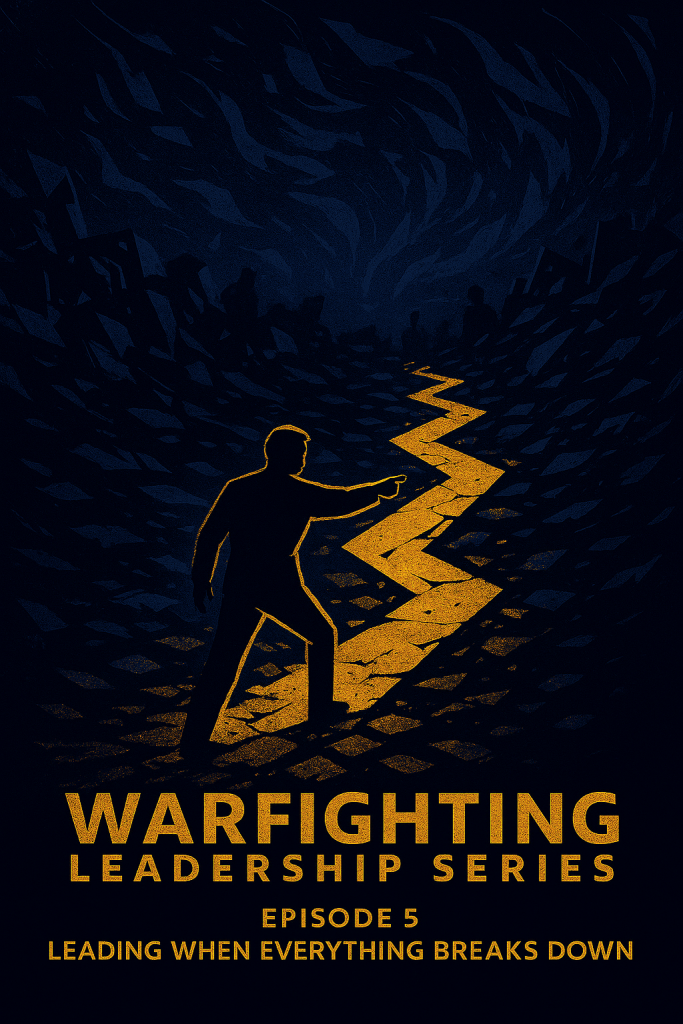
  • Episode 5 – Chaos: Leading When Everything Breaks Down

    ⚡️ Chaos: Leading When Everything Breaks Down

    Warfighting Leadership Series, Episode 5

    INTRODUCTION 🔥

    This episode examines the reality of chaos and the leadership demands that come with it. You will see why breakdowns are unavoidable, how leaders can operate when systems fail, and what separates those who freeze from those who act. The goal is to understand chaos as a natural part of complex environments and to learn how to lead through it with clarity and confidence.


    CORE CONCEPTS 🧨

    🧩 Chaos Is the Default, Not the Exception

    In any complex environment, chaos is normal. Systems drift out of alignment, communication falters, and people interpret information differently (Boyd’s OODA loop helps leaders decide, communicate, and act). Leaders who expect everything to run smoothly are always surprised. Leaders who expect chaos build teams that can adjust quickly, expect the unexpected.

    Chaos comes from unpredictability, human mistakes, external influences, and internal friction. It is not a sign that something is wrong. It is a sign that you are operating in a real, dynamic environment. The leader’s responsibility is not to eliminate chaos but to function effectively within it, they bring order to the chaos.


    🧠 Control Is an Illusion

    The more interconnected a system becomes, the less any single person can control. Leaders who try to manage every detail during a breakdown slow the team and create confusion. They unintentionally become the obstacle, decision paralysis can take hold.

    Effective leaders shift from control to influence. They set intent, shape priorities, and empower others to act. They understand that trying to FORCE order onto a chaotic situation usually makes it worse. They understand that Influence moves faster than control, and trust moves faster than oversight. Leaders enable those closest to the problem with the ability to maneuver through the problem space using feedback loops to cut through the fog and navigate the situation.


    🛠️ Improvisation Is a Core Skill, Not a Last Resort

    When systems collapse, improvisation becomes the primary method of execution. This does not mean guessing. It means adapting with purpose. Improvisation works when leaders have created the right conditions: clear intent, distributed judgment, psychological safety, and trust.

    Leaders must treat improvisation as a legitimate form of action. They should reward initiative and avoid punishing people for adjusting to reality. In chaos, the best solutions are often the ones that were never written into the plan but still align with the mission. Judgement is essential and the ability to be decisive is necessary.


    🧭 The Leadership Reveal

    Chaos exposes leaders. When everything is falling apart, you discover what a person is truly made of. Pressure does not create character, it reveals it. The same boiling water that softens a potato hardens an egg. The environment is the same, but the internal composition determines the outcome.

    In moments of panic, people split into two paths. Some rise to the challenge with clarity and resolve. Others freeze, hoping someone else will act first. This is the moment when leadership becomes unmistakable. All eyes turn to the person who steps forward. If the designated leader hesitates, the next person who moves with purpose becomes the real leader, regardless of rank or title.

    A leader understands what must be done, when it must be done, and acts without waiting for perfect conditions. Decisive action in the midst of chaos builds confidence. It reassures the team that someone is carrying the weight, someone is thinking clearly, and someone is willing to move when others cannot.

    Chaos does not test the plan. It tests the leader.

    Sage Advice: When the environment breaks down, leadership becomes visible.


    CORE INSIGHT 🎯

    Chaos is not the enemy. It is the moment when leadership stands out. Those who act with clarity and resolve become the anchor for everyone else.


    MILITARY TO CIVILIAN TRANSLATION TABLE 📘

    Military ConceptLeadership TranslationBusiness or IT Example
    Battlefield chaosSystem breakdownNetwork outage or supply chain collapse
    Loss of controlDecentralized executionAgile pivot or crisis response
    ImprovisationAdaptive strategyRapid product shift or live incident handling
    Friction and chaosHuman error and volatilityMiscommunication or conflicting priorities
    Command under pressureLeadership visibilityExecutive response during crisis

    LOGOS, ETHOS, PATHOS TRIAD 🎙️

    Logos (Logic)

    Chaos is inevitable in complex systems. Leaders must design organizations that can adapt rather than rely on rigid structures.

    Ethos (Credibility)

    Credibility grows when leaders stay composed during breakdowns. Calm decisions and clear communication build trust.

    Pathos (Emotion)

    Chaos creates fear and frustration. Leaders must help people channel those emotions into purposeful action instead of paralysis.


    DISCUSSION PROMPT 💬

    Think of a moment when your team faced unexpected breakdown. What did you do, and what would you change if you could revisit that moment?


    FINAL FORMATION 🪖

    This episode explored the nature of chaos, why control fails, and how leaders operate when systems collapse. You learned how leadership becomes visible in chaos, and how decisive action builds trust and momentum. In the next episode, we move into the deeper mechanics of complexity with Episode 6: Complexity, Why Control Fails.


    Disclaimer: The views expressed in this post reflect those of the author and do not necessarily represent the views of any organization or institution.

    #Business #GovCon #Leadership #TalentAcquistion #TechCareerDevelopment #TechLeadership
  • 🌊Episode 4, Fluidity: Adapt or Fall Behind

    🌊 Fluidity: Adapt or Fall Behind

    Warfighting Leadership Series:  Episode 4

    INTRODUCTION 🌟

    This episode explains why leaders who cling to rigid plans collapse under pressure, why environments shift faster than organizations expect, and how adaptive leaders turn volatility into advantage. You will see how fluidity shapes decisions, teams, and competitive outcomes, and how leaders can build organizations that move with change rather than drown in it.


    CORE CONCEPTS 🔱

    🌪️ 1. Reality Never Holds Still

    In war and in business, nothing stays fixed. Competitors pivot, markets shift, technology evolves, and human behavior refuses to follow a script. Leaders who expect stability set themselves up for shock.

    Fluid environments demand leaders who can:

    • Sense change early
    • Reorient quickly
    • Shift resources without hesitation
    • Abandon sunk costs
    • Move faster than the environment destabilizes them

    Rigid leaders break. Adaptive leaders bend and redirect.


    🔄 2. Plans Are Starting Points, Not Shackles

    A plan is a hypothesis. The moment it meets reality, it begins to decay.
    The mistake many leaders make is treating the plan as the truth rather than a tool.

    Failure modes include:

    • Overcommitting to outdated assumptions
    • Ignoring new information because it contradicts the plan
    • Confusing activity with progress
    • Punishing teams for improvising

    High‑performing organizations treat plans as scaffolding, not cages. They don’t fall in love with the plan.


    🌊 3. Tempo Fluctuates, and Leaders Must Match It

    Fluid environments move in waves. There are surges of intensity, followed by lulls, followed by sudden spikes.

    Strategic leaders must:

    • Push hard when targets of opportunity appear
    • Conserve energy when the environment slows
    • Avoid burning out teams by maintaining a consistent rhythm
    • Recognize when the competitor is overextended

    The leader who understands tempo can dictate the rhythm of competition.


    🧭 4. Adaptation Requires Decentralized Judgment

    Fluidity overwhelms centralized control.
    No leader can see everything, decide everything, or react fast enough.

    Teams must be empowered to:

    • Make decisions at the edge; mission-type orders
    • Adjust tactics without waiting for permission; acting from intent
    • Communicate changes upward, not wait for direction downward; seize the initiative
    • Act on intent, not instructions; apply judgement

    Fluid environments reward initiative and punish hesitation.


    🧠 5. Human Factors Shape Adaptability

    Fluidity is not just environmental, it is emotional.

    People under pressure experience:

    • Cognitive overload
    • Fear of making the wrong call
    • Desire for certainty
    • Resistance to abandoning familiar patterns

    Leaders must create psychological safety for adaptation by:

    • Normalizing change
    • Rewarding initiative
    • Reducing fear of failure
    • Modeling flexibility

    Sage Advice:
    The environment will not wait for you to feel ready. Adaptation begins the moment reality shifts, not the moment you feel comfortable.


    CORE INSIGHT 🎯

    Fluidity is not chaos. It is motion. Leaders who learn to move with it gain advantage over those who try to freeze it.

    The leader’s job is not to eliminate change but to harness it, shape it, and ride it faster than competitors can respond. You may be on the right track, but if your not moving fast enough the train will still hit you.


    MILITARY → CIVILIAN TRANSLATION TABLE 📘

    Military ConceptLeadership TranslationBusiness / IT Example
    Fluid battlefieldConstantly shifting environmentMarket disruption, new tech, regulatory shifts
    Changing tempoVariable operational intensityProduct launches, outages, funding cycles
    Decentralized actionEmpowered teamsDevOps autonomy, agile squads
    Rapid reorientationPivoting based on new infoChanging roadmap after customer feedback
    Local initiativeDecision-making at the edgeEngineers resolving incidents without escalation

    LOGOS, ETHOS, PATHOS TRIAD 🎙️

    Logos (Logic)

    Fluidity is a structural reality of modern markets. Data cycles, customer expectations, and competitive moves shift too quickly for static plans. Logical leaders build systems that adapt.

    Ethos (Credibility)

    Leaders earn trust by demonstrating calm responsiveness, not rigid adherence to outdated plans. Credibility grows when teams see leaders adjust with clarity and purpose.

    Pathos (Emotion)

    Fluidity creates anxiety. Leaders must acknowledge the emotional weight of change and channel it into confidence, not fear. People follow leaders who make uncertainty feel navigable.


    DISCUSSION PROMPT 💬

    Where in your organization do you see rigidity slowing progress, and what would happen if those teams were empowered to adapt in real time?


    FINAL FORMATION 🪖

    Today we explored how fluidity shapes leadership, why rigid plans collapse, and how adaptive leaders turn shifting environments into strategic advantage. You learned how tempo, decentralization, and human factors influence adaptability, and how to translate these ideas into business and IT leadership. In the next episode, we move deeper into the realities of chaos with Disorder: Leading When Everything Breaks Down.


    Disclaimer: The views expressed in this post reflect those of the author and do not necessarily represent the views of any organization or institution.

    #Business #GovCon #Leadership #TalentAcquistion #TechCareerDevelopment #TechLeadership